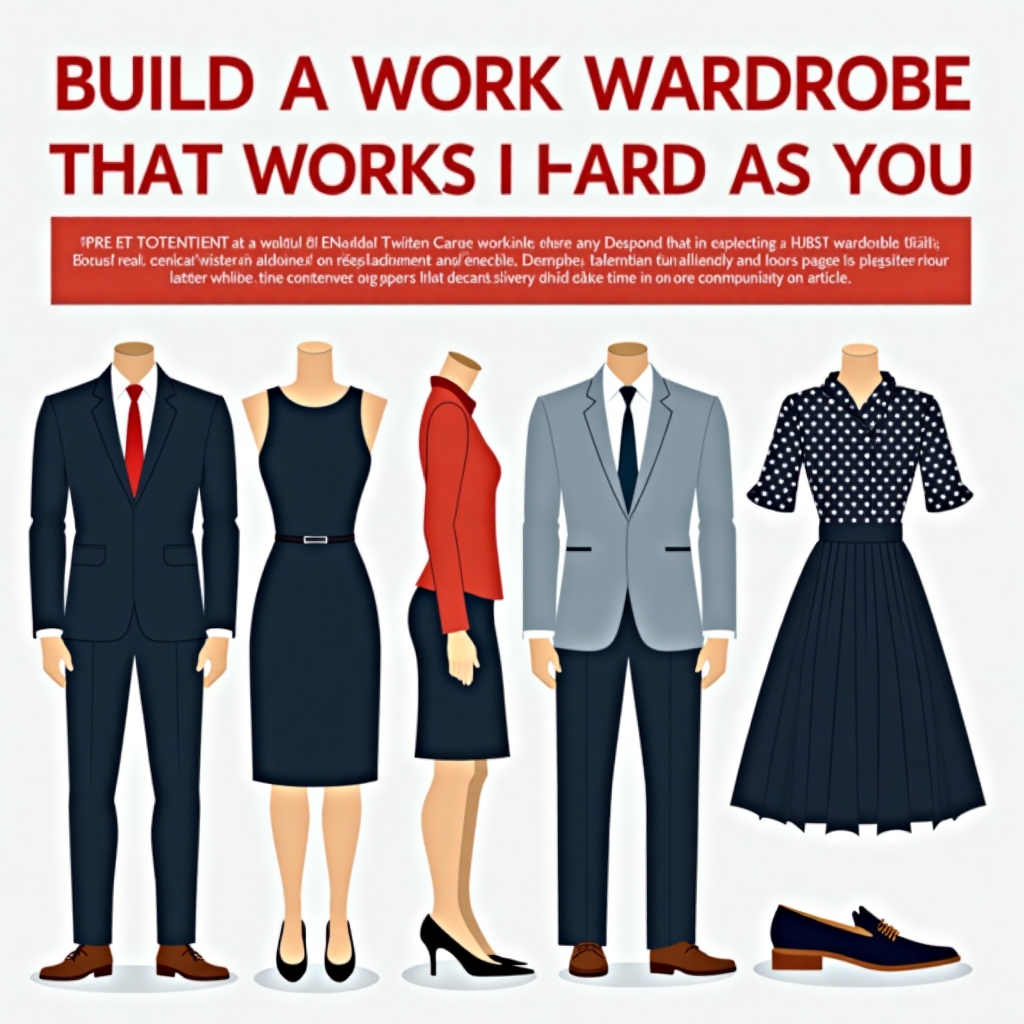
Build a Work Wardrobe That Works as Hard as You Do
If you have ever stood in front of a closet full of clothes and thought, “I have nothing to wear for work,” you are not alone. A functional work wardrobe is not about having an overflowing closet. It is about having the right pieces that fit well, work together, and make getting dressed in the morning effortless. Whether you are starting a new job, returning to the office, or simply tired of feeling uninspired by your current rotation, learning how to build a work wardrobe is one of the most valuable investments you can make in your professional image and your daily peace of mind.
Building a work wardrobe from scratch can feel overwhelming, especially when you consider the cost of clothing, changing workplace dress codes, and the pressure to look polished every day. But the secret is that a strong work wardrobe does not require dozens of pieces. It requires a strategy. When you focus on quality, fit, versatility, and a cohesive color palette, you can create a wardrobe that supports your career and simplifies your routine. This guide will walk you through every step of the process, from assessing your workplace culture to selecting foundational pieces, managing your budget, and maintaining your clothing so it lasts for years.
Step 1: Assess Your Workplace Culture and Dress Code
Before you buy a single item, you need to understand the environment you are dressing for. Workplaces today range from formal corporate offices to casual startups, and many companies fall somewhere in between. The way you dress should communicate that you understand the culture and respect the expectations of your role. A wardrobe built for a law firm will look very different from one built for a creative agency or a remote-friendly tech company.
Start by observing what people around you are wearing. If you are new to a company, review the employee handbook or ask HR about the dress code. Look at leaders and colleagues you admire, and note how they interpret the rules. Some common categories include:
- Business formal: Tailored suits, dress shirts, ties, closed-toe leather shoes, and conservative colors. This is typical in law, finance, and executive settings.
- Business casual: Dress trousers or chinos, blouses, button-down shirts, knitwear, blazers, and polished shoes. This is the most common office dress code.
- Smart casual: Dark jeans or tailored pants, nice tops, sweaters, and clean, minimal sneakers or loafers. This is common in tech, startups, and creative industries.
- Casual: Jeans, t-shirts, and comfortable shoes. Even in casual settings, the best-dressed employees usually add a layer of polish through fit and grooming.
Once you identify your workplace category, you can build a wardrobe that fits the culture while still allowing your personal style to shine. When in doubt, it is always better to dress slightly more professionally than the minimum requirement, especially in the first few months of a new job.
Step 2: Define Your Personal Work Uniform
A personal work uniform is a repeatable outfit formula that makes you feel confident and comfortable. It is not about wearing the exact same thing every day. Instead, it is about identifying the silhouettes and combinations that work for your body, your schedule, and your industry. When you have a uniform, you remove decision fatigue and make shopping more intentional.
Think about the types of outfits you already reach for when you need to feel pulled together. Maybe you love a blazer over a silk blouse with tailored trousers. Maybe you feel best in a midi dress and a cardigan. Perhaps your go-to is dark jeans, a crisp white shirt, and a structured jacket. Write down two or three outfit formulas that you can rotate throughout the week. For example:
- Formula 1: Tailored trousers + knit top + blazer + loafers
- Formula 2: Midi skirt + blouse + cardigan + ankle boots
- Formula 3: Dark denim + button-down shirt + structured jacket + clean sneakers
Once you define your uniform, you can build your wardrobe around those formulas instead of purchasing random items that do not go together. This is the foundation of a truly functional closet.
Step 3: Start with the Foundation Pieces
The most important step in building a work wardrobe is investing in high-quality foundation pieces. These are the items that form the base of your outfits and can be mixed and matched across multiple looks. Without strong foundations, even the most stylish accessories will not save an outfit. Focus on fit, fabric, and versatility when selecting these pieces.
Tops
Start with a collection of tops that can be layered or worn alone. A few essential styles include:
- Button-down shirts: Crisp white and light blue shirts are timeless and can be dressed up or down.
- Silk or satin blouses: These add a polished, feminine touch and pair well with trousers and skirts.
- High-quality knit tops: Merino wool or cotton sweaters in neutral colors work across seasons.
- Simple shells and tees: Layering pieces that look polished under blazers or cardigans.
Bottoms
Your bottoms should be comfortable enough to wear all day but structured enough to look professional. Consider these essentials:
- Tailored trousers: A well-fitting pair in black, navy, or gray is a non-negotiable.
- Pencil or midi skirt: Choose a style that allows you to move comfortably and sits at a flattering length.
- Dark-wash jeans: If your workplace allows denim, choose a dark wash with no distressing.
- Chinos or cropped pants: A smart casual option that bridges the gap between formal and relaxed.
Outerwear and Layers
Layers are what make an outfit look intentional. A great blazer or cardigan can elevate even the simplest top and bottom combination.
- Tailored blazer: The single most transformative piece in a work wardrobe. Choose one in a neutral color that fits well in the shoulders.
- Cardigan: A fine-gauge cardigan in a solid color is polished and comfortable.
- Trench coat or wool coat: For commuting and cold weather, a structured coat completes your professional look.
Step 4: Choose a Cohesive Color Palette
A cohesive color palette is the glue that holds your work wardrobe together. When most of your clothing is in complementary colors, you can mix and match pieces easily, and everything in your closet feels like part of one collection. The easiest way to build a palette is to start with neutrals and then add one or two accent colors that reflect your personal style.
Great neutral base colors for work include black, navy, gray, cream, white, camel, and taupe. These colors are versatile, professional, and easy to pair with almost anything. Once you have your neutrals, choose a small number of accent colors. For example, you might add a deep burgundy, forest green, or soft blush. Keep your accent colors consistent so that your tops, accessories, and layers all coordinate.
A good rule of thumb is to make about seventy percent of your wardrobe neutral and thirty percent accent colors. This balance gives you plenty of outfit options without overwhelming your closet. You can also use accessories like scarves, belts, and jewelry to introduce small pops of color without committing to an entire garment in a bold shade.
Step 5: Focus on Fit and Tailoring
The difference between looking polished and looking sloppy often comes down to fit. A relatively inexpensive shirt that fits well will look better than an expensive one that is too tight or too loose. When building a work wardrobe, prioritize fit over brand names and trends. If a piece is almost perfect but needs a small adjustment, take it to a tailor. Hemming trousers, taking in a waist, or shortening sleeves can transform a garment and is usually worth the extra cost.
Pay attention to how clothing fits in three key areas:
- Shoulders: For jackets and blazers, the shoulder seam should sit at the edge of your shoulder without pulling or drooping.
- Waist: Trousers and skirts should sit comfortably at your natural waist or the intended rise without gaping or digging in.
- Length: Trousers should break slightly at the shoe or stop just above it. Skirt lengths should be appropriate for your workplace and allow you to sit and move comfortably.
Also consider the fabric and how it behaves throughout the day. Natural fibers like wool, cotton, silk, and linen breathe better than synthetic fabrics, which means you will be more comfortable and less likely to wrinkle excessively. Investing in quality fabrics helps your clothing hold its shape and last longer.
Step 6: Build a Capsule Wardrobe for Work
A capsule wardrobe is a small, curated collection of clothing that can be mixed and matched to create many different outfits. For a work wardrobe, a capsule approach is especially effective because it reduces clutter and ensures that everything in your closet is something you actually wear. A typical work capsule might include around twenty to thirty core pieces, not including accessories and shoes.
Here is an example of a simple business casual capsule that can generate dozens of outfits:
- 2 tailored trousers (black and gray)
- 1 dark-wash jean or chino
- 1 midi skirt
- 3 button-down shirts (white, light blue, striped)
- 2 silk blouses (cream, accent color)
- 2 knit sweaters (navy, camel)
- 1 tailored blazer (navy or black)
- 1 cardigan (gray or beige)
- 1 structured coat (trench or wool)
- 2 pairs of work shoes (loafers and ankle boots, for example)
- 1 belt and a small collection of simple jewelry
With this capsule, you can create combinations for every day of the week without repeating the exact same outfit. The key is that every piece works with at least two or three other pieces in the collection, so you never feel stuck.
Step 7: Seasonal Considerations and Layering
Your work wardrobe should be able to transition through seasons without requiring a completely new closet. The best way to achieve this is through layering. In cooler months, add tights under skirts, wear sweaters over button-down shirts, and layer a blazer over a fine knit top. In warmer months, remove the layers and rely on breathable fabrics like cotton, linen, and lightweight silk.
Invest in a few season-specific pieces that will keep you comfortable without sacrificing style. For winter, consider a wool overcoat, a cashmere or merino sweater, and lined trousers. For summer, choose lightweight blouses, cropped trousers, and open-toe shoes if your workplace allows them. The goal is to maintain a polished appearance even when the weather challenges your wardrobe.
One practical tip is to organize your closet by season and keep your core capsule pieces accessible year-round. Store off-season items separately so you can see what you have and avoid buying duplicates. Rotating your wardrobe twice a year also gives you a chance to assess each item and decide whether it still fits, still feels current, and still serves your professional needs.
Step 8: Invest in Great Shoes and Accessories
Shoes and accessories are often the first things people notice, so they deserve special attention when building a work wardrobe. You do not need a huge collection of shoes. Instead, focus on a few high-quality pairs that are comfortable enough for long days and versatile enough to wear with most of your outfits.
Consider these work shoe essentials:
- Leather loafers: A classic choice that works with trousers, skirts, and smart casual looks.
- Ankle boots: Perfect for fall and winter, especially in black or brown leather or suede.
- Ballet flats: A comfortable, polished option for days when you are on your feet.
- Low block heels or pumps: Choose a heel height you can actually walk in all day.
- Minimal white sneakers: Only if your workplace allows them, and keep them spotless.
Accessories should be simple and intentional. A structured tote bag or leather backpack is practical and professional. A classic watch, small earrings, and a simple necklace can add polish without being distracting. Belts should match your shoe color in formal settings, though this rule is more flexible in business casual environments. Avoid overly flashy or noisy accessories that can undermine a professional image.
Step 9: Budgeting and Shopping Smart
Building a work wardrobe can be expensive, but it does not have to happen all at once. A smart approach is to create a budget and a prioritized shopping list, then add pieces gradually over time. Start with the items that will give you the most outfit options right away, such as a blazer, tailored trousers, and a few versatile tops. Then fill in the gaps as your budget allows.
When shopping, consider cost per wear rather than just the price tag. A two-hundred-dollar blazer that you wear twice a week for three years is a better investment than a forty-dollar blazer that loses its shape after a month. Look for quality indicators such as natural fabrics, sturdy stitching, lined garments, and reputable brands known for durability. You can also find excellent pieces at consignment shops, online resale platforms, and seasonal sales if you are patient and know what you need.
Resist the urge to chase fast fashion trends. Work wardrobe trends change slowly, and classic pieces will serve you far longer than trendy items. If you want to incorporate a trend, do so through inexpensive accessories or a single top rather than overhauling your entire wardrobe. This keeps your look current without compromising your investment in timeless staples.
Step 10: Maintain Your Wardrobe for Longevity
Once you have built a work wardrobe you love, you need to protect your investment. Proper care can extend the life of your clothing by years and keep you looking sharp every day. Start by reading and following care labels carefully. Wash delicate items by hand or on a gentle cycle, and use a steamer or iron to keep wrinkles at bay. A well-pressed shirt or pair of trousers instantly elevates your appearance.
Store your clothing properly. Hang blazers, blouses, and dresses on quality hangers that support the shoulders. Fold heavy sweaters to prevent stretching. Keep shoes clean and use shoe trees to maintain their shape. Consider rotating your shoes so they have time to air out between wears, especially if you wear them for long hours.
Finally, do a seasonal closet review. Every few months, assess your wardrobe and identify anything that no longer fits, is damaged beyond repair, or no longer aligns with your work style. Donate or sell those items, and make a note of any gaps you need to fill. This simple habit keeps your closet manageable and ensures that everything in it is something you feel confident wearing.
Conclusion
Building a work wardrobe is not about following arbitrary fashion rules or spending a fortune on clothing. It is about creating a collection of pieces that make you feel confident, capable, and ready to focus on your work instead of your outfit. By understanding your workplace culture, defining your personal uniform, investing in quality foundations, and staying disciplined about fit and color, you can build a wardrobe that works as hard as you do.
Start small, shop intentionally, and remember that the best work wardrobe is the one that reflects your professional identity while making your daily routine easier. With the right pieces and a little planning, you can walk out the door every morning looking polished and prepared for whatever the day brings. Your wardrobe should support your career, not complicate it. Build it thoughtfully, care for it well, and it will serve you for years to come.