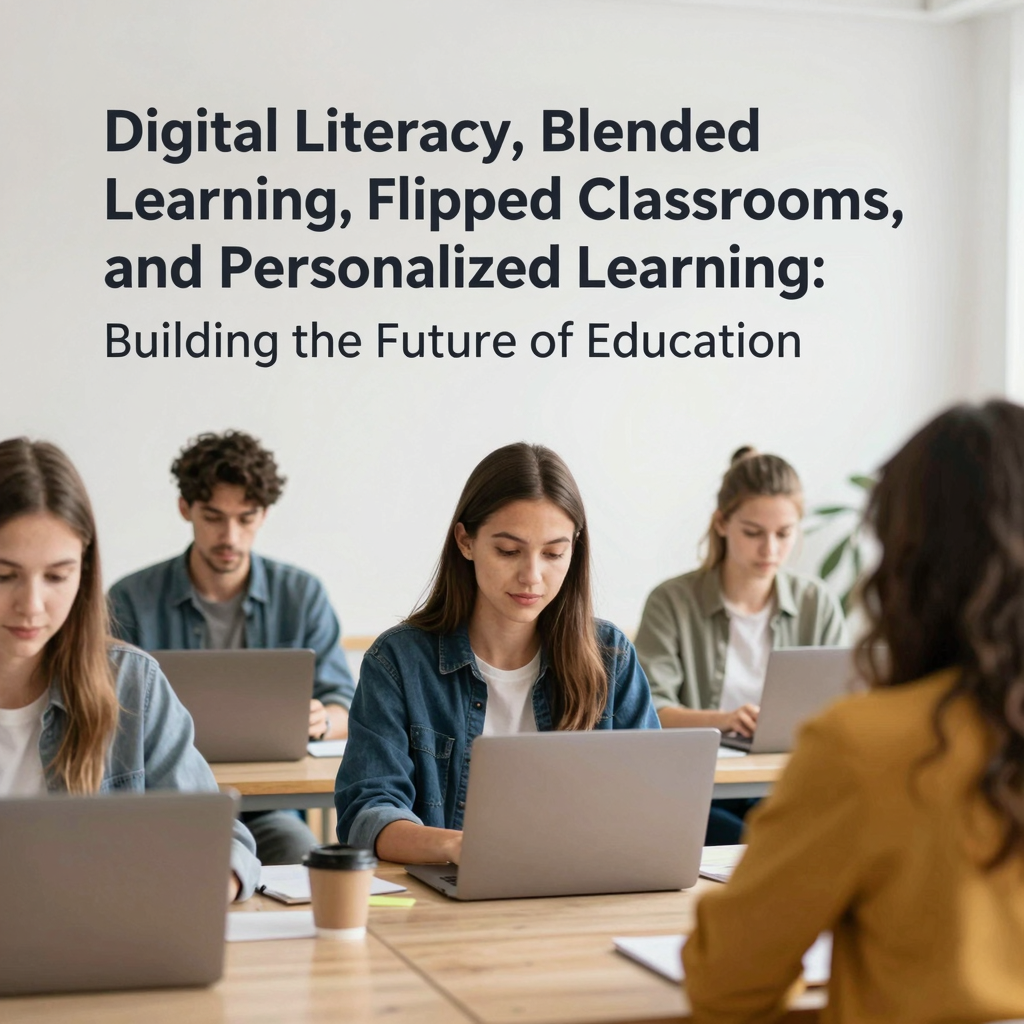
In the past decade, education has shifted from a one-size-fits-all industrial model to a dynamic ecosystem driven by technology, data, and learner-centered design. As a blogger who has spent ten years covering educational transformation, I have witnessed the rise of four powerful concepts that are reshaping classrooms around the world: digital literacy, blended learning, the flipped classroom, and personalized learning. These are not just buzzwords. They represent a fundamental rethinking of how we teach, how students learn, and how schools can prepare young people for a rapidly changing world.
When these four ideas are implemented together, they create an educational experience that is more engaging, more equitable, and more effective than traditional lecture-based instruction. However, understanding each concept individually is only the first step. The real power lies in seeing how they complement one another. Digital literacy gives students the skills to navigate technology. Blended learning provides the framework for combining online and offline instruction. The flipped classroom changes the way instructional time is used. Personalized learning ensures that every student receives the right level of challenge and support. Together, they form a coherent vision for 21st-century education.
This article explores each of these concepts in depth, examines how they intersect, and offers practical strategies for educators, administrators, and parents who want to bring these ideas into real learning environments. Whether you are a classroom teacher looking to try your first flipped lesson or a school leader planning a digital transformation, this guide will help you understand the why, the what, and the how.
Understanding Digital Literacy in Modern Education
Digital literacy is often misunderstood as simply knowing how to use a computer or operate a smartphone. In reality, it is a much broader and deeper competency. Digital literacy encompasses the ability to find, evaluate, create, and communicate information using digital technologies. It includes critical thinking about online content, understanding digital safety and privacy, and using digital tools responsibly and ethically. In a world where misinformation spreads faster than ever, digital literacy is not optional; it is essential for full participation in society.
For students, digital literacy means more than being able to type a search query into Google. It means knowing how to assess the credibility of a website, recognizing bias in online media, and understanding how algorithms shape the information they see. It also involves creating digital content, such as videos, podcasts, infographics, and blog posts, rather than just consuming it passively. In the modern classroom, digital literacy is the foundation upon which all other technology-enhanced learning strategies are built. Without strong digital literacy skills, students cannot fully benefit from blended learning, flipped classrooms, or personalized learning platforms.
Why Digital Literacy Matters Now More Than Ever
The COVID-19 pandemic accelerated the shift to digital learning and exposed significant gaps in digital literacy among both students and educators. Many learners struggled not because they lacked access to devices, but because they had not been taught how to learn effectively online. They did not know how to manage their time, evaluate digital resources, or communicate professionally in virtual environments. This experience demonstrated that simply handing out laptops is not enough. Schools must intentionally teach digital literacy as a core skill, just like reading and mathematics.
Moreover, the job market increasingly demands digital competencies. According to numerous workforce studies, the vast majority of jobs now require some level of digital skill, and this trend will only continue. By embedding digital literacy into every subject area, schools prepare students not only for academic success but also for lifelong employability and civic engagement. A digitally literate person can adapt to new tools, think critically about digital media, and use technology to solve real-world problems.
Blended Learning: The Best of Both Worlds
Blended learning is an instructional approach that combines traditional face-to-face teaching with online learning activities. In a blended learning model, students have some control over the time, place, pace, or path of their learning. The goal is not to replace teachers with technology, but to use technology to enhance and extend the learning experience. Blended learning can take many forms, including station rotation, lab rotation, flex models, and enriched virtual models. The common thread is that online and offline components are integrated meaningfully, not just added as an afterthought.
The benefits of blended learning are well documented. Students can access learning materials anytime and anywhere, which is particularly helpful for those who need extra time to master concepts or who want to move ahead. Teachers can use data from online platforms to identify learning gaps and provide targeted intervention. Blended learning also promotes student agency, as learners take more responsibility for their own progress. When implemented well, blended learning creates a more flexible, responsive, and learner-centered classroom.
Key Blended Learning Models
There are several established blended learning models that schools can adopt. Each has its own strengths and is suited to different contexts. Understanding these models helps educators choose the right approach for their students and goals.
- Station Rotation: Students rotate through different learning stations on a fixed schedule, with at least one station being online learning. This model works well in elementary classrooms and allows for small-group instruction.
- Lab Rotation: Similar to station rotation, but students move to a dedicated computer lab for the online component. This is useful when classroom devices are limited.
- Flex Model: Online learning is the primary mode of instruction, and teachers provide on-site support as needed. This model offers maximum flexibility and is often used in credit recovery or alternative education programs.
- Flipped Classroom: A specific type of blended learning where students first encounter new content at home through videos or readings, then use class time for deeper application and support. This model is discussed in detail below.
- Enriched Virtual Model: Students complete most of their coursework online but attend required face-to-face sessions with teachers, typically once or twice a week.
Regardless of the model, successful blended learning requires careful planning, reliable technology, and ongoing professional development for teachers. It is not about simply digitizing worksheets; it is about reimagining the learning experience to be more active, collaborative, and personalized.
The Flipped Classroom Model
The flipped classroom is one of the most prominent and widely adopted blended learning strategies. In a traditional classroom, teachers introduce new content during class time, often through lectures, and students complete practice assignments at home. The flipped classroom flips this sequence. Students are introduced to new material at home, typically through short video lectures, interactive simulations, or curated readings. Class time is then freed up for active learning activities such as discussions, problem-solving, projects, and one-on-one support.
The rationale behind the flipped classroom is simple: the hardest parts of learning often happen when a student is alone at home, struggling with homework, and the teacher is not available to help. By moving content delivery outside of class, the teacher can be present during the application phase, when students need the most guidance. This shift transforms the teacher from a lecturer into a facilitator and coach. It also makes learning more active and social, as students work together during class instead of passively listening.
How to Flip Effectively
Flipping a classroom involves more than just recording a video and assigning it as homework. To be effective, teachers must follow several key principles.
- Keep videos short and focused: Research suggests that student engagement drops significantly after about six to ten minutes of video. Break content into small, digestible chunks and focus on one key concept per video.
- Hold students accountable: Use embedded questions, guided notes, or short quizzes to ensure that students actually watch and understand the pre-class material. This helps the teacher identify misconceptions before class begins.
- Design meaningful in-class activities: The freed-up class time should be used for higher-order thinking tasks such as collaborative projects, debates, lab experiments, and problem-based learning. Avoid the temptation to simply repeat the lecture.
- Provide access and support: Not all students have reliable internet access at home. Schools must provide alternatives such as downloading videos to devices, offering after-school access to computer labs, or using USB drives.
- Communicate with parents: Parents may be unfamiliar with the flipped model and may wonder why the teacher is not “teaching” in the traditional sense. Clear communication about the benefits and expectations is essential for success.
When done well, the flipped classroom leads to higher student engagement, deeper understanding, and more personalized support. It is a powerful way to make the most of limited face-to-face time and to shift the focus from teaching to learning.
Personalized Learning: Tailoring Education to the Individual
Personalized learning is an educational approach that aims to customize learning for each student’s strengths, needs, skills, and interests. In a personalized learning environment, students have a say in what they learn, how they learn, and how they demonstrate their learning. Teachers use data, technology, and flexible instructional strategies to meet each learner where they are and help them progress at their own pace.
Personalized learning is not the same as individualization or differentiation, although the terms are often used interchangeably. Differentiation typically involves the teacher adjusting instruction for groups of students based on their needs. Individualization involves adjusting the pace for individual students. Personalized learning goes further by giving students more agency and voice in their own learning journey. It recognizes that each learner brings unique prior knowledge, cultural background, interests, and goals, and it seeks to honor that diversity.
Core Components of Personalized Learning
Effective personalized learning environments share several core components. These components help ensure that personalization is meaningful and not just a superficial use of technology.
- Learner Profiles: Each student has a detailed profile that captures their strengths, needs, interests, and learning preferences. This profile is updated regularly and informs instructional decisions.
- Personal Learning Paths: Students have access to a sequence of learning experiences that is customized to their individual needs and goals. They may move faster through content they have mastered and spend more time on challenging concepts.
- Competency-Based Progression: Students advance based on demonstrated mastery of skills and knowledge, rather than seat time or age. This allows for flexible pacing and ensures that no student is left behind or held back artificially.
- Flexible Learning Environments: The physical and virtual learning spaces are designed to support a variety of learning activities, including independent work, small-group collaboration, and direct instruction.
- Student Agency and Ownership: Students are encouraged to set their own learning goals, make choices about their learning activities, and reflect on their progress. This builds motivation, self-regulation, and lifelong learning skills.
Technology plays a critical role in making personalized learning scalable. Adaptive learning platforms can assess student performance in real time and recommend next steps. Learning management systems allow teachers to organize and deliver customized content. Data dashboards give teachers and students insight into progress and areas for growth. However, technology is a tool, not a replacement for strong relationships and skilled teaching. The human element remains at the heart of personalized learning.
The Synergy: How These Concepts Work Together
Digital literacy, blended learning, the flipped classroom, and personalized learning are not isolated initiatives. They are deeply interconnected and mutually reinforcing. Digital literacy is the foundational skill that enables students to thrive in any technology-enhanced environment. Blended learning provides the structural framework for combining digital and face-to-face instruction. The flipped classroom is a specific pedagogical strategy that uses blended learning to free up class time for deeper learning. Personalized learning is the overarching goal that gives all of these efforts direction and purpose.
Consider a typical lesson that integrates all four concepts. A teacher creates a short video introducing a new scientific concept and posts it to the class learning platform along with an interactive quiz. Students watch the video at home, practicing digital literacy as they evaluate the content and take notes. The next day in class, the teacher reviews the quiz data and identifies students who need additional instruction. Those students meet in a small group while others engage in a collaborative lab experiment. Each student works on a project that allows them to explore an aspect of the topic that interests them, using digital tools to research, create, and present their findings. This lesson is flipped, blended, personalized, and grounded in digital literacy.
The synergy among these concepts creates a learning environment that is more efficient and more human. Teachers spend less time delivering one-size-fits-all lectures and more time working directly with students. Students take greater ownership of their learning and develop the skills they need to succeed in a digital world. The result is an education system that is better aligned with the demands of the 21st century.
Implementing These Strategies in Your Classroom or Institution
Bringing these concepts to life requires thoughtful planning, ongoing support, and a willingness to learn from both successes and failures. Here are some practical steps for educators and school leaders who want to implement digital literacy, blended learning, the flipped classroom, and personalized learning.
Start Small and Build Momentum
It is tempting to overhaul everything at once, but early success is more likely when you start small. Choose one strategy, such as flipping a single lesson or introducing a station rotation model in one subject area. Pilot it with a small group of teachers, gather feedback, and refine the approach before scaling up. This iterative process builds confidence and creates a culture of continuous improvement.
Invest in Professional Development
Teachers are the most important factor in the success of any educational innovation. They need time and training to learn new tools, redesign lessons, and analyze data. Professional development should be ongoing, job-embedded, and collaborative. Teachers benefit from coaching, peer observation, and professional learning communities where they can share successes and solve problems together.
Ensure Equitable Access to Technology
Digital learning cannot succeed if students lack reliable access to devices and high-speed internet. Schools must address the digital divide by providing devices, mobile hotspots, community Wi-Fi partnerships, and offline access to learning materials. Equity must be a priority from the start, not an afterthought.
Use Data Responsibly and Effectively
Blended and personalized learning generate a wealth of data about student progress. This data can be used to inform instruction, identify gaps, and celebrate growth. However, data must be used responsibly. Schools must protect student privacy, avoid over-testing, and ensure that data informs rather than replaces teacher judgment. The goal is to use data to support students, not to label them.
Foster a Culture of Student Agency
Personalized learning requires a shift in mindset for both teachers and students. Students must learn how to set goals, manage their time, seek help when needed, and reflect on their learning. Teachers must learn to release some control and trust students to make meaningful choices. This cultural shift takes time and intentional teaching of self-regulation and metacognitive skills.
Overcoming Common Challenges
While the benefits of these approaches are clear, implementation is not without challenges. Understanding these hurdles can help educators prepare and respond effectively.
Resistance to Change
Change is hard, and some educators, students, and parents may resist moving away from traditional instructional models. Addressing this resistance requires clear communication about the why, opportunities for input, and evidence of positive outcomes. School leaders must model a growth mindset and celebrate early adopters while supporting those who are more hesitant.
Technology Fatigue and Overload
Too many tools and platforms can overwhelm both teachers and students. Schools should be strategic about selecting a small set of high-quality tools that integrate well with one another. Simplicity and consistency are more important than having the latest gadgets. Training should focus on how technology supports learning goals, not just on the technical features.
Time Constraints
Teachers already have demanding schedules, and redesigning lessons for blended, flipped, or personalized learning takes time. Schools must provide dedicated planning time, reduce administrative burdens, and share resources across grade levels and subject areas. Collaborative planning can significantly reduce the workload and improve the quality of materials.
Ensuring Rigor and Accountability
Some critics worry that personalized and flipped approaches may lower academic rigor or allow students to slip through the cracks. To address this, schools must maintain high expectations, use frequent formative assessment, and ensure that student choice is balanced with clear learning standards. Rigor does not mean everyone doing the same thing at the same time; it means every student being challenged to reach their full potential.
Conclusion
Digital literacy, blended learning, the flipped classroom, and personalized learning are reshaping education in profound ways. They are moving schools away from a factory model of education toward a more human, flexible, and student-centered approach. Digital literacy gives students the essential skills to navigate and create in a digital world. Blended learning combines the best of online and face-to-face instruction. The flipped classroom reimagines how class time is used to support deeper learning. Personalized learning ensures that every student can learn in a way that honors their individuality.
The journey toward this vision is not easy, and it requires commitment from educators, leaders, students, and families. But the potential rewards are enormous. When these four concepts are implemented together, schools become places where students are not just passive recipients of information, but active, empowered learners who are prepared for the challenges and opportunities of the future. The future of education is not about technology alone; it is about using technology to build more meaningful human connections and to help every learner thrive. The time to begin is now.